
The Company is committed to continuously managing and reducing greenhouse gas emissions arising from its business operations. The Company places importance on improving energy efficiency,
optimizing resource utilization, and adopting environmentally friendly innovations and technologies to support sustainable growth. In addition, the Company aims to drive the organization toward its long-term Carbon Neutrality goal. To achieve this goal, the Company has established the
following greenhouse gas management guidelines
• Enhancing Energy Efficiency The Company promotes the selection and use of high-efficiency and energy-saving equipment, machinery, and technologies,
while continuously improving operational processes to optimize energy consumption and ensure efficient and appropriate use of energy resources.
• Promoting the Use of Digital TechnologyThe Company promotes the adoption of digital technologies to enhance operational efficiency, reduce paper consumption,
and support the transition toward a Paperless Office. This approach helps streamline work processes, improve resource efficiency, and reduce environmental impacts associated with paper usage.
• Efficient Travel Management The Company promotes efficient travel management by encouraging the use of electronic meetings and remote communication
technologies to reduce unnecessary travel and minimize greenhouse gas emissions associated with business travel.
• Promoting the Use of Clean and Renewable Energy The Company promotes the appropriate use of clean and renewable energy in line with the nature of its
business operations. The Company also explores and studies innovative energy solutions and technologies that can help reduce environmental impacts and support sustainable business operations.
• Raising Employee Awareness and Engagement The Company promotes employee awareness and engagement through communication, training, and campaigns on energy
conservation and greenhouse gas emission reduction. These initiatives aim to foster an organizational culture that values environmental responsibility and encourages employees to actively participate in environmental conservation efforts.
The Company continuously monitors, measures, and evaluates its greenhouse gas emissions by preparing an annual Corporate Carbon Footprint (Carbon Footprint for Organization: CFO) inventory. The data
serves as a baseline for analyzing the environmental impacts of the Company’s business operations, developing greenhouse gas emission reduction measures, monitoring the effectiveness of implemented initiatives, and establishing continuous improvement targets. These efforts contribute to the
long-term enhancement of the Company’s environmental performance.
In the future, the Company plans to further develop its greenhouse gas management system in alignment with international standards and best practices. The Company will focus on expanding the scope of
greenhouse gas emissions data collection and management to cover Scope 3 emissions more comprehensively. In addition, the Company will assess the feasibility of establishing greenhouse gas emission reduction targets in accordance with Science-Based Targets (SBTs). The Company also aims to
enhance its climate change-related disclosures in alignment with international standards and to respond to the expectations of stakeholders across all sectors. These efforts are intended to create long-term business value while contributing to sustainable social and environmental development.
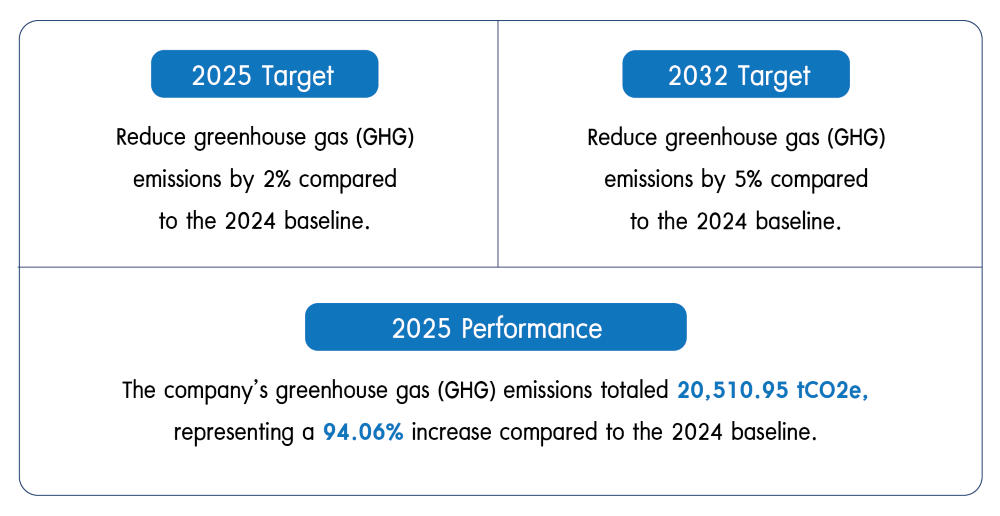
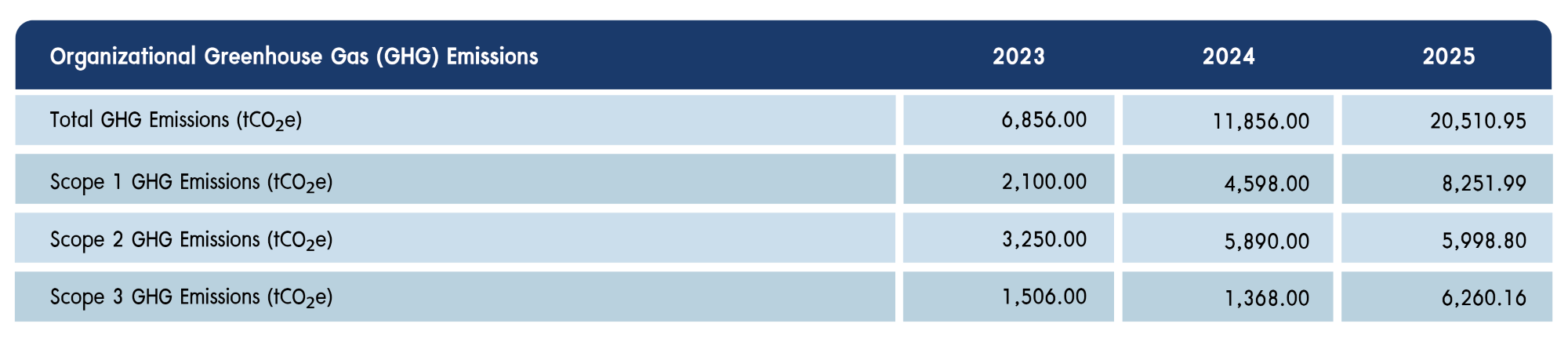
The Company places importance on managing greenhouse gas emissions arising from its business operations and is committed to systematically monitoring, assessing, and analyzing its greenhouse gas
emissions. This enables the Company to identify key sources of greenhouse gas emissions and establish appropriate measures to mitigate environmental impacts. The Company considers greenhouse gas emissions across the following emission scopes: Scope 1, direct greenhouse gas emissions
from sources owned or controlled by the organization; Scope 2, indirect greenhouse gas emissions associated with the consumption of purchased electricity; and Scope 3, other indirect greenhouse gas emissions occurring throughout the Company’s value chain. This comprehensive approach enables
the Company to effectively manage its greenhouse gas emissions and reflect the overall environmental impacts arising from its business operations.
Overall, the data for the period from 2023 to 2025 indicates a continuous upward trend in the Company’s greenhouse gas emissions, with the highest total emissions recorded in 2025. The increase in greenhouse
gas emissions may be associated with business expansion, increased operational activities, or changes in the boundaries and methodologies used for data collection. The Company should therefore consider these factors when analyzing its greenhouse gas emissions performance to ensure that the
assessment is accurate and appropriately reflects the actual circumstances.
The Company therefore focuses on systematic greenhouse gas management, with an emphasis on measuring and monitoring emissions trends, identifying key emission sources, and establishing appropriate
greenhouse gas emission reduction measures. These efforts are complemented by improving energy and resource efficiency, promoting the use of clean energy, reducing reliance on fossil fuels, and managing greenhouse gas emissions throughout the value chain. These initiatives aim to support the
Company’s environmental objectives, minimize the environmental impacts of its business operations, and strengthen the Company’s readiness to pursue environmentally responsible business practices and achieve sustainable long-term growth.